
Tecidos de malha: o guia definitivo para profissionais têxteis
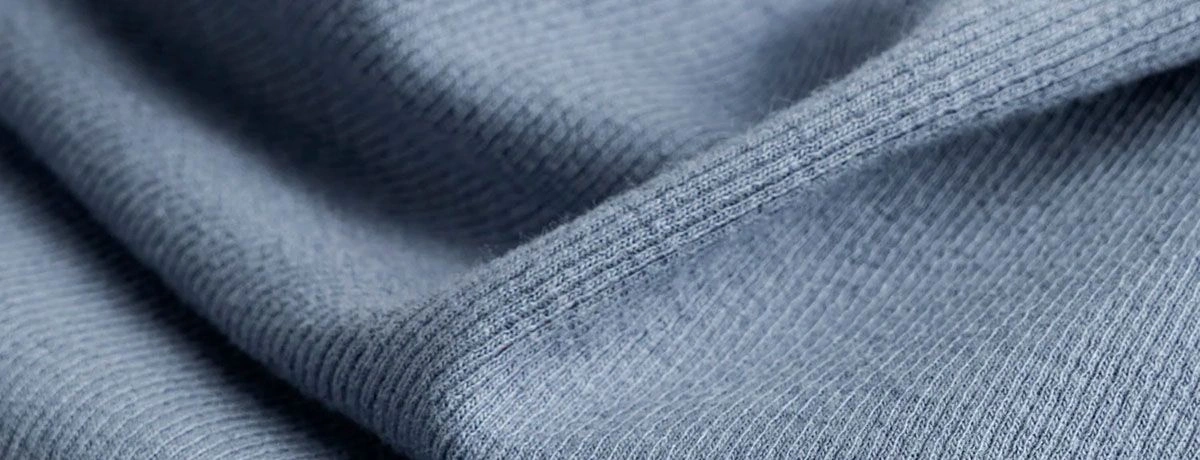
Knitted fabrics are textiles built from interlocking loops of yarn rather than yarns crossed at right angles. That single structural difference is why a t-shirt stretches and a dress shirt doesn't. For buyers, it also drives everything that matters downstream: stretch, drape, shrinkage, pilling, and price.
The global knitted fabrics market is valued at roughly USD 22.5 billion in 2025 and is projected to reach about USD 31.9 billion by 2034. If you source for apparel or home textiles, knits are no longer a niche, they're the default for comfort-driven product.
- The knitted fabrics market sits at ~USD 22.5B (2025), growing at a 3.5%–6% CAGR.
- Weft knits (jersey, rib, interlock) stretch and drape; warp knits (tricot, raschel) resist runs and hold shape.
- China leads knit fabric supply; Bangladesh dominates knit garments; Turkey serves premium EU-facing orders.
- Recycled polyester reached ~9.3M tonnes in 2024 and knits are its biggest application.
This guide walks through what knitted fabrics are, the warp-vs-weft split that decides most sourcing calls, key properties, where to buy, and the trade-offs to plan for.
O que são tecidos de malha?
Knitted fabrics are made by interlocking loops of yarn into connected rows and columns, which gives them built-in elasticity even when the yarn itself has none. This is the opposite of tecidos, where two yarn sets interlace at right angles to create a stable, low-stretch cloth. The loop structure is what makes knits a naturally material elástico.
Knits account for a large share of global fabric consumption, driven by athleisure, fast-fashion cycles, and technical textiles for sport and medical use. In our experience sourcing for apparel clients, the question is rarely "knit or woven" but "which knit," because the construction inside the category changes cost and performance more than the fiber does.
Knit and purl: the two stitches everything is built from
Every knit fabric comes down to knit and purl stitches. A knit stitch pulls a loop forward for a smooth, flat face. Purl stitches pull it backward for a raised, ridged texture. Alternate them and you get ribbing, the stretchy structure used for cuffs and collars. Rib knit fabric is made by alternating knit and purl stitches, is highly elastic, is commonly used for cuffs, necklines, and waistbands, and lies flat more reliably than plain jersey edges. Cross groups of stitches through loop transfers and cable knitting creates a rope-like appearance in the fabric. Add yarn-overs and you get openwork lace.
For a buyer, the takeaway is simple: stitch pattern controls stretch and recovery. Ribbing recovers tightly, which is why a Tecido elástico de 4 vias behaves differently from a flat jersey even at the same weight.
Warp knit vs weft knit: which one do you need?
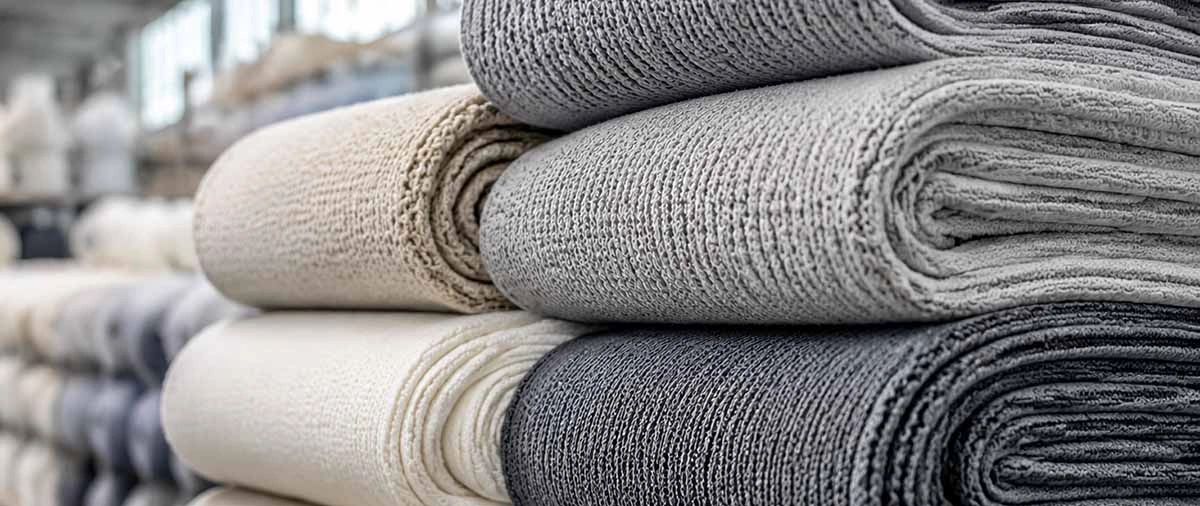
The single most useful distinction in knitted fabrics is warp versus weft, because it predicts stretch, run-resistance, and end use before you ever touch a swatch. Weft knits loop yarn horizontally and are generally easier to make than warp-knit fabrics, while warp knits loop yarn vertically and resist runs while holding their shape. Roughly speaking, soft comfort wear is weft, where single knits are the basic category, and structured technical product is warp. Across both systems, different yarn types also affect performance.
| Fator | Malha de trama | Malha de urdidura |
|---|---|---|
| Loop direction | Horizontal (across rows) | Vertical (along columns) |
| Stretch | High, soft, drapes | Lower, stable, holds shape |
| Run / ladder risk | Can unravel from a dropped stitch | Resists runs and laddering |
| Lavagem | Circular & flat-bed | Máquinas de tricô |
| Tecidos típicos | Suéter, Rib, interligar | Tricot, raschel, laundry mesh |
| Destaques | Camisetas, roupas de lazer, roupas esportivas | Sportswear, lingerie, industrial mesh |
Warp vs weft knit comparison. Source: MH-Chine sourcing reference, 2026.
Weft knits: jersey, rib, interlock
Weft knitting loops yarn horizontally on circular or flat-bed machines, producing the soft, stretchy fabrics most people picture when they hear "knit" for everyday clothing. Jersey, rib, and interlock all sit here. Circular knitting makes seamless tubular cloth, which is why t-shirts and socks can skip side seams, cut waste, and simplify garment construction. Interlock gives a stable double-faced fabric that looks the same on both sides. Many weft knits are light, generally lighter than woven fabrics, and favored for close-to-body apparel. Jersey-style knits often use bamboo or viscose for soft apparel, and fiber choice gives them different properties and a beautiful drape. These weft knits are also common for skirts and other easy-fit clothing.
Warp knits: tricot, raschel, mesh
Warp knitting loops yarn vertically to build columns of loops, giving excellent shape retention and run-resistance. These warp knit fabrics trade stretch for stability, which is exactly what sportswear, lingerie, and industrial textiles need. Tricot knits are typically made from filament yarns for a smooth surface and resist runs while sewing cleanly. Raschel knits can use different weights to create more intricate or textured effects, and can be engineered into openwork structures similar to fashion lace fabrics for garments. Double knits, built on two needle beds with interlock stitches, hold shape without curling, commonly in poliéster or wool, and pair well with a stable coated oxford backing in technical builds.
What properties make knitted fabric worth sourcing?
Knitted fabrics earn their market share on four different properties: elasticity, breathability, durability, and wrinkle resistance. The looped structure stretches and recovers, lets moisture pass through and evaporate, and springs back from creasing, which is why knits dominate activewear, hosiery, sleepwear, and uniforms where comfort and low maintenance both matter; in bottoms and light outerwear these are often paired with four-way stretch woven fabrics to keep structure while adding mobility.
-
Elasticidade — loops stretch and recover with excellent stretch, and some knitted fabrics can stretch up to 500%, helping a knitted garment conform comfortably during movement; ideal for activewear and hosiery.
-
respirabilidade — open loop structure wicks moisture, suited to athletic and sleepwear.
-
Durability & wrinkle resistance — withstands repeated wash cycles, good for workwear and uniforms.
Specialty constructions extend the range. French terry carries loops on one face and a smooth surface on the other for breathable activewear and undergarments. Sweatshirt fleece adds midweight warmth for hoodies, joggers, and cozy home textiles. Plush fabrics include plush and purl knits, which drape softly and read the same on both sides, suiting sweaters and children's wear; in velour, double looped stitches create pile loops that are sheared and brushed for a soft surface. Double brushed poly is another brushed knit valued for softness and stretch in leggings, dresses, tops, and loungewear, similar in end use to Tecido de nylon e elastano para roupa de banho com elasticidade em 4 direções. used for performance leggings and fitted tops.
Where are knitted fabrics in fashion and home textiles?
Knitted fabrics span runway knitwear to mattress covers, and demand is broadening on both ends. Cotton jersey alone anchors t-shirts, dresses, leggings, and children's wear in global markets, while a knitted garment line can also extend into light jackets or soft hats, and knitted throws, cushion covers, and mattress covers ride growing demand for soft, premium home essentials. Bulky, handmade-look sweaters have driven a clear knitwear revival in fashion.
On the home side, midweight knits like sweatshirt fleece have crossed from apparel into blankets and loungewear-style home goods, and they can also stretch to fit complex shapes in upholstery applications, especially when specifiers understand sewing and textiles fundamentals for home and automotive use. The pattern we see with buyers: a fabric that performs in apparel usually finds a second life in home textiles within a season or two, so qualifying one good knit supplier often opens two product lines, especially if that mill also offers stable TC 65/35 twill fabrics for wovens in the same programs.
Sourcing knitted fabrics from MH
As a China-based textile manufacturer and exporter, MH supplies knitted fabrics across both weft and warp constructions in one place: cotton and polyester jersey, rib, interlock, double knit, fleece, plus 4-way stretch knits and warp-knit mesh for sportswear, loungewear, lingerie, and home textiles.
- One-stop knit range — weft (jersey, rib, interlock, fleece) and warp (tricot, raschel, mesh) from a single supplier.
- Desenvolvimento personalizado — tailored fiber blends, GSM/weight, width, color, and finishes such as anti-pill, moisture-wicking, and recycled content.
- Controle de qualidade — sample-to-bulk consistency with pre-shipment shrinkage and pilling checks before dispatch.
- Serviço pronto para exportação — built for garment manufacturers, textile wholesalers, and home textile producers.
Need swatches or a quote on a specific knit? Contact MH with your weight, fiber, and quantity, and we'll match you to the right construction.


Perguntas frequentes
What is the difference between knitted and woven fabric?
Knitted fabric is built from interlocking loops of yarn, giving it natural stretch and drape. Woven fabric interlaces two yarn sets at right angles for a stable, low-stretch cloth. In short, knits stretch and recover, wovens hold a crisp shape, which is why t-shirts are knit and dress shirts are woven.
Is warp knit or weft knit better?
Neither is universally better, it depends on the end use. Weft knits (jersey, rib, interlock) stretch and drape for t-shirts and loungewear. Warp knits (tricot, raschel, mesh) resist runs and hold shape for sportswear, lingerie, and industrial textiles. Choose weft for comfort, warp for stability, and remember that your knit tops often sit alongside polyester-cotton school uniform fabrics for bottoms, shirts, and blazers in the same program.
Do knitted fabrics shrink?
Cotton-rich weft knits can shrink 3–7% if washed hot or tumble-dried, while synthetic and warp knits are more stable. Cold-wash, lay-flat-dry care and a pre-shrink finish at the mill keep shrinkage predictable. Always test shrinkage on bulk fabric before production.
Why do knitted fabrics pill?
When you’re testing for pilling on prototypes, also check stitch quality and needle condition; using the right sewing machine needles compatible with common brands helps avoid surface damage that accelerates fuzzing and pills. The loose loop structure lets short surface fibers work loose and tangle into small balls (pills). Tighter constructions like rib knit and anti-pill yarn treatments reduce it significantly. Specifying an anti-pill finish at the sampling stage is the most cost-effective fix, and in hand-knit-style collections this starts with choosing smoother milk cotton hand knitting yarns that shed less from the outset.
